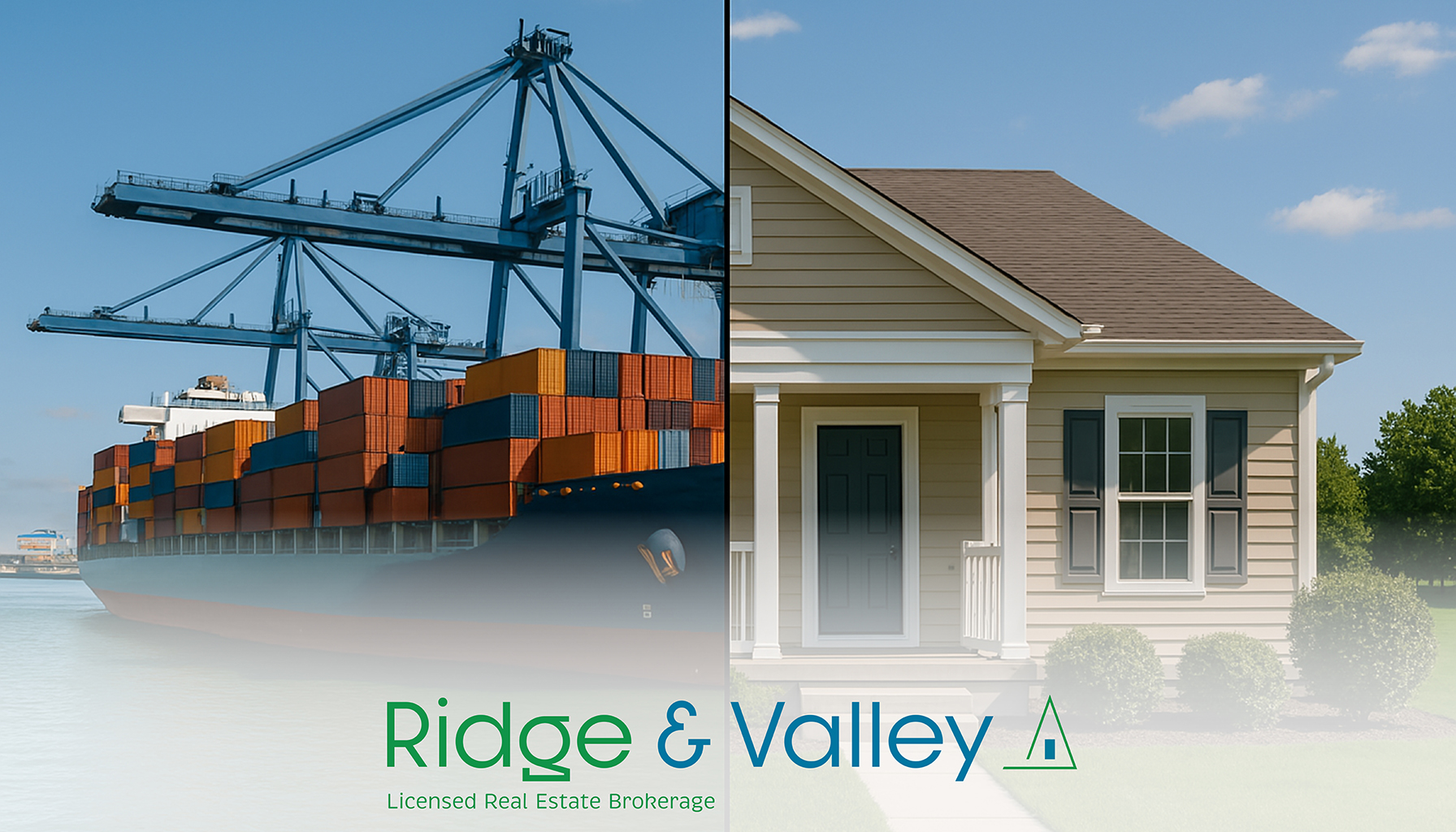
If you’re house‑hunting in Bergen County or eyeing a weekend getaway in Orange County, America’s trade policy may not be the first thing on your mind. Yet import tariffs can have an impact on home prices, mortgage rates, even the cost of a kitchen remodel. In April 2025 President Donald Trump announced the broadest tariff package in nearly a century, placing double‑digit levies on most trading partners and key building materials [The Wall Street Journal].
For buyers and sellers, that raises two pressing questions:
- Will tariffs make homes more expensive or cheaper?
- Should you speed up—or slow down—your real‑estate plans?
The short answer: tariffs are already nudging construction costs higher and injecting fresh uncertainty into mortgage markets. But the full impact depends on where you live, what you’re buying or selling, and how long the trade war lasts. The guide below walks you through the essentials.
Tariffs 101—A Primer
A tariff is a tax on imported goods. In theory it makes foreign products costlier, steering consumers toward U.S. alternatives and encouraging domestic investment. In practice, most economists agree that tariffs behave like a sales tax: American businesses pay them at the port and pass much of the cost to shoppers [The Economist].
What changed recently? The administration proposed sweeping new trade measures that significantly broadened the scope of tariffs. These include taxes on nearly every import, along with sharply higher "reciprocal" rates targeting specific countries such as China, India, and the European Union. In terms of materials, key building components like lumber, steel, aluminum, copper, and major appliances were all placed squarely in the tariff crosshairs. Additionally, China and several other countries have answered with their own levies on U.S. exports, raising recession fears [The New York Times].
How Tariffs Impact the Housing Market
Tariffs influence housing through five main channels:
- Construction inputs: Framing lumber, drywall, nails, wiring and HVAC units often cross borders. Tariffs have lifted the material cost of a typical new build by about $9,000, according to the National Association of Home Builders [NAHB].
- Finished home goods: Imported refrigerators, ranges, lighting and flooring will arrive at U.S. docks 10‑34 percent more expensive, a premium that flows through to showroom price tags [Mortgage Professional America].
- Mortgage rates: Each tariff headline rattles Wall Street, driving investors into Treasury bonds and nudging mortgage rates down temporarily. If the inflation those tariffs create sticks, however, the Federal Reserve could push rates higher later [Crain's Detroit Business].
- Household budgets: Economists estimate the new levies add $1,500–$1,900 a year to the typical family’s cost of living. With less disposable income, would‑be buyers have smaller down‑payments and tighter purchase budgets [Yale Budget Lab].
- Builder confidence: Higher input costs and economic uncertainty have a cooling effect on housing starts. Fewer new homes = tighter inventory.
What Buyers Should Watch
Sticker Shock in New Construction
If you’re shopping for a newly built home, ask the builder:
- When were materials purchased? Pre‑tariff lumber or steel means today’s asking price bakes in fewer cost increases.
- Is there an escalation clause? Some contracts let builders raise prices if tariffs climb further. Read the fine print.
Expect a $8.9k–$12.7k tariff premium on a $700k suburban colonial—roughly $45–$65 a month on a 30‑year mortgage [NAHB].
Renovation Reality
Buying a fixer‑upper? Factor tariffs into your reno budget:
- Appliances: Average U.S. washing‑machine prices jumped 12 percent after the 2018 tariff round; similar hikes are likely on broader appliance lines this year [Federal Reserve].
- Cabinets & flooring: Many mid‑price cabinets and luxury‑vinyl planks come from China or Vietnam
- Plan B materials: Domestic alternatives exist, but supply is limited and lead‑times longer. Build an extra month into your contractor schedule.
Mortgage‑Rate Window
The 30‑year fixed rate dipped below 6.6 percent in April as Wall Street sold stocks and bought bonds [Freddie Mac]. If you’re rate‑sensitive, act quickly: markets can reverse on any sign of a trade truce or Federal Reserve monetary policy change.
What Sellers Should Watch
Pricing Power—A Double‑Edged Sword
Higher new‑construction costs lift the ceiling for resale prices—good news if you’re listing. But buyers still face affordability caps. Over‑price and you’ll sit. Our usual “Goldilocks list‑price” strategy applies: target the sweet spot that sparks multiple offers without scaring off financed buyers [further reading: List Price Strategy: Maximize your Home's Value].
Home‑Improvement ROI
Sellers often spruce up kitchens or baths pre‑listing. With tariff‑inflated material costs:
- Cosmetic refreshes (paint, hardware, lighting) still deliver solid ROI.
- Major gut jobs may not pencil out.
Refer back to our guide on Major Improvements & Their Impact on Home Value for cost‑versus‑return benchmarks—then add 10–15 percent to material line‑items to account for tariffs.
Buyer Pool Shifts
If tariffs shave growth from Wall Street bonuses or tech hiring, luxury segments could slow first. Conversely, if mortgage rates slip, entry‑level demand may spike. Keep an eye on days‑on‑market and price‑reduction trends in your micro‑neighborhood; they’ll signal which side of the see‑saw is winning.
Special Considerations in New York & New Jersey
- Port Exposure: The Port of Newark/Elizabeth handles $200 billion in goods annually. A slowdown means fewer warehouse and trucking jobs—softening housing demand in nearby counties [Port Authority of NY & NJ].
- Local Industry: Pharmaceutical & Chemical companies in New Jersey depend on global supply chains for ingredients, lab equipment, and packaging materials—much of which is imported. Higher tariffs on these goods may trigger workforce reductions. A decline in job stability—especially in high-earning sectors can directly affect housing demand. Buyers may delay purchases and lenders may tighten credit, causing home sales to cool [Chemical & Engineering News].
- High Baseline Costs: With median single‑family prices already north of $700k in many NYC suburbs, a tariff‑induced $10k bump is less likely to kill deals—but it adds additional pressure to first‑time buyers.
- Condo & Association Fees: Building maintenance costs rise when imported boiler parts, pool equipment or façade materials get pricier. Expect HOA fees to trend higher in 2026 budgets.
Five Smart Moves in a Tariff‑Turbulent Market
Smart strategies for navigating a tariff‑turbulent market:
If you’re a buyer
- Secure a rate lock that includes a float‑down option.
- Prioritize builders who bulk‑purchased materials before tariffs took effect.
- Pad your renovation budget by roughly 15 percent to absorb price spikes.
If you’re a seller
- Consider listing sooner if your home competes with new construction.
- Concentrate on high‑impact, low‑cost updates such as paint and landscaping.
- Price to the current market, not the moon.
If you’re a remodeler or DIY homeowner
- Source domestic or tariff‑exempt alternatives
- Schedule projects during contractors’ off‑peak periods, when labor discounts can offset material spikes.
If you’re an investor or landlord
- Re‑evaluate rent‑growth assumptions—tenants’ budgets are pinched by tariff‑driven living‑cost increases.
- Hedge interest‑rate risk on any variable‑rate debt.
For everyone
- Stay informed—tariff lists evolve quickly.
- Maintain healthy cash reserves; trade turbulence often sparks market volatility.
- Lean on a local expert who tracks both real‑estate and economic‑policy trends.
Final Thoughts
Tariffs are often discussed in the abstract—something that happens in Washington or Beijing. However, import taxes travel a remarkably short road from cargo container to closing table. In New York and New Jersey, where land is scarce and construction costs are already among the nation’s highest, a few percentage points on lumber or appliances can tip a marginal deal from green‑light to red‑ink. That reality is now baked into builders’ pro formas, remodelers’ bids, and, ultimately, the listing prices you see on your favorite home search app.
Does that mean you should rush to buy or hit pause on selling? Not necessarily. Real‑estate decisions are intensely personal; driven by life events, school calendars, and long‑term wealth goals. What tariffs do is change the inputs to those decisions: they can add a premium to new‑home prices, slow the pace of fresh inventory, and nudge mortgage rates in unpredictable directions. They can also tighten household budgets by raising the cost of everyday goods, leaving buyers with less room for down‑payments and sellers with a smaller pool of qualified offers.
The best strategy in a tariff‑turbulent market is the same one that wins in calmer times: stay informed, stay flexible, and work with professionals who track both the micro trends on your block and the macro forces in Washington. If you’re buying, lock a mortgage rate you can live with and build a 10–15 percent cushion into renovation plans. If you’re selling, price to today’s reality, not last spring’s headline. And if you’re renovating or investing, source materials wisely and keep cash reserves. Volatility cuts both ways, and opportunities often emerge when the market is chaotic.
At Ridge & Valley Real Estate we believe knowledge is the most durable hedge against uncertainty. Whether tariffs escalate, ease, or morph into something entirely new, we’ll translate the policy chatter into actionable advice for your next move. Have questions about how these shifts affect your specific neighborhood or price point? Let’s talk—we’re here to help you navigate from the loading dock all the way to your front porch.
Happy home buying & selling from the team at Ridge & Valley Real Estate!
Disclaimer:
This blog post is for general informational purposes only and does not constitute legal, tax, investment, or financial advice. Real estate markets and regulations vary by location, and every person’s financial situation is unique. Consult with a real estate attorney, licensed financial advisor, or CPA before making major housing or financing decisions. While we strive to ensure the accuracy of the data herein, market conditions and regulations can change, and any figures, links, or statistics cited may be subject to updates.